
Criminal Cases in the Taylor County Courts
Taylor County has one Wisconsin Circuit Court branch. It handles felony cases coded CF, misdemeanor cases coded CM, criminal traffic matters coded CT, and county ordinance proceedings that reach circuit court. A fine-only municipal matter may stay in a local channel, so a missing WCCA result does not prove that no citation exists. Confirm the route with the issuing city or village when the allegation is an ordinance violation rather than a state crime.
The Taylor County Clerk of Circuit Court is the custodian for filed pleadings, minutes, orders, judgments, exhibits, and court financial records. The court and clerk are at 224 S. 2nd St. in Medford. Call the clerk at 715-748-1425 about a file or the judge's line at 715-748-1435 for chambers routing. Ask the clerk to confirm the destination before faxing because the official clerk page and general county directory publish different fax numbers. Clerk staff can explain CCAP mechanics and office procedure, but they cannot interpret the law or recommend what a party should file.
Taylor County's Single Criminal Court
One branch gives Taylor County criminal cases a clear local destination, yet it does not merge the roles of police, prosecutor, and court. The arrest report remains with the agency that wrote it. The District Attorney decides what to file. Once a complaint is filed, clerk staff maintain the court record while the judge controls hearings and orders. This split matters when the same event has different names or dates in separate systems.
The official Wisconsin court search gateway shows the route into the public system.
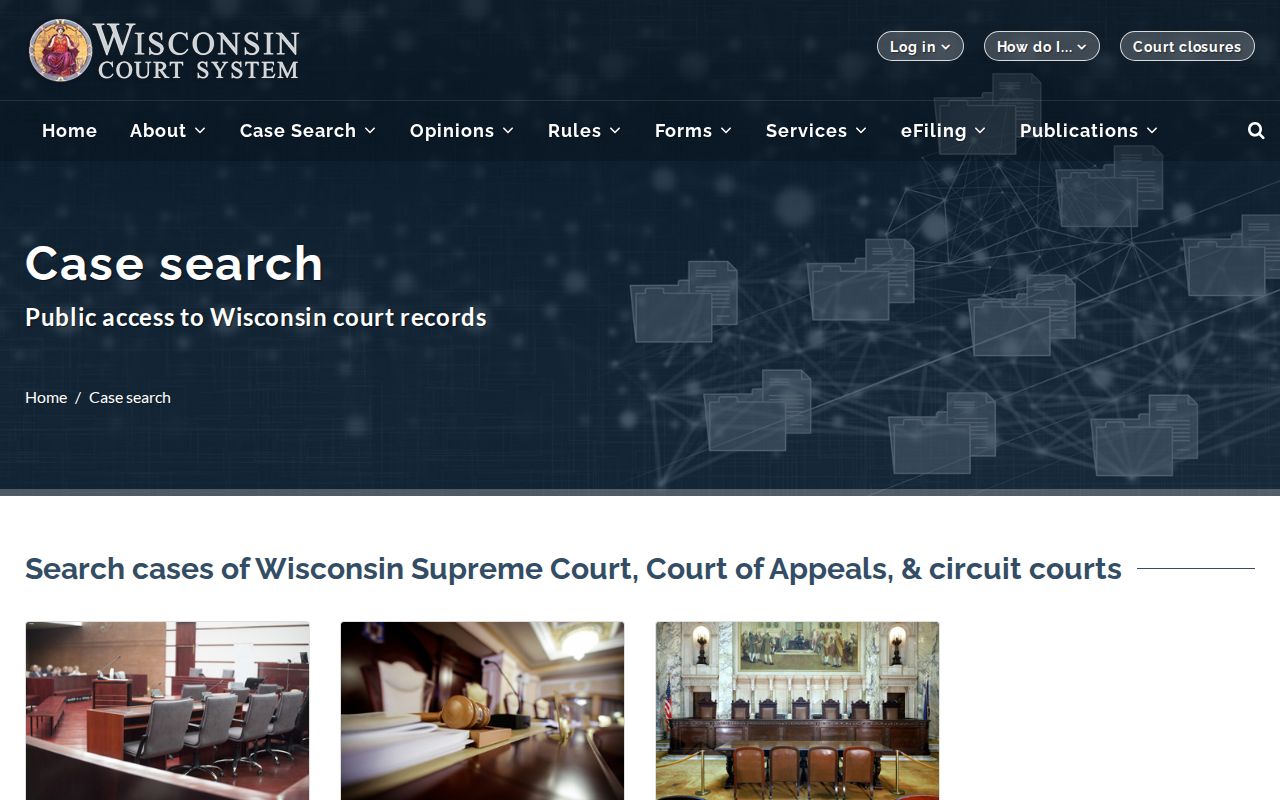
That statewide gateway is the starting point for public docket data, while Taylor County's clerk remains the source for the filed document itself.
How to Search Case Records
Wisconsin Circuit Court Access, often called WCCA or CCAP, is free and statewide. A full case number is the strongest key. A party name also works, but spelling, middle names, and birth dates help separate similar people. WCCA may lag a very recent courtroom event, and confidential, juvenile, or expunged matters will not be fully visible.
- Open WCCA, accept its terms, and choose the circuit court search.
- Enter a party name or a complete Taylor County case number.
- Limit the county to Taylor and narrow by birth date, filing dates, or CF, CM, or CT case type when useful.
- Open the case, inspect each charge, and read the court-record events in date order through disposition and sentence.
- Give the case number to the clerk and request the exact plain or certified document needed.
| Field Label | Type | Required | Notes |
|---|---|---|---|
| Last name | Text | Yes for name search | Party surname; spelling matters |
| First and middle name | Text | No | Narrows common-name results |
| Case number | Text | Alternative | Often includes year and CF, CM, or CT code |
| Birth date | Date/text | No | Useful for identity matching; handle with care |
| County and case type | Select | No | Choose Taylor and the relevant case class |
| Filing date range | Date | No | Limits broad results where available |
If the Taylor County case search is broad, remove optional fields before changing the spelling. Once the correct case opens, save its number because the clerk will use it to locate documents and distinguish similar names.
Taylor County Court Documents Stay Offline
WCCA is an index, not a document-download service. It can identify a Taylor County criminal case and display public metadata, but it does not sell or display the complaint, judgment, motion, transcript, or exhibit. The courthouse record therefore matters when exact language, probable-cause allegations, signed conditions, or certification is needed. Note the case number, document title, and filing date before calling the clerk. Ask whether a plain copy is enough or whether the receiving office requires certification, then request a cost estimate because no Taylor County copy fee was confirmed in the research.
The Wisconsin CCAP access explanation distinguishes remote public information from courthouse inspection.
The distinction explains why a docket can be visible from home while the signed filing still must come from the Taylor County clerk.
What the Case File Shows
A Taylor County court file is organized around prosecution, not booking. The caption and number identify the action. Charge rows show the statute, severity, offense date, plea, and count-level outcome. Docket events show what was filed or heard. Bond, scheduled hearings, judgment, sentence, and financial entries appear in their own areas. Read every count because an original charge may be amended, dismissed, read in at sentencing, or resolved differently from another count.
| Case Number & Court | County, filing year, case type, sequence, caption, filing date, and status |
|---|---|
| Charging Document | Complaint or information stating the filed allegations and cited statutes |
| Docket Entries | Dated filings, hearings, motions, orders, and responsible officials |
| Hearing Dates | Scheduled and completed appearances, including initial appearance and trial events |
| Disposition & Judgment | Plea, conviction, dismissal, acquittal, or other result for each count |
| Sentence & Conditions | Confinement, probation, extended supervision, restitution, bond, and financial obligations when entered |
For Taylor County criminal cases, the complaint states allegations while the judgment and disposition fields show what the court ultimately decided. The event list connects those points but does not reproduce the signed papers.
Read Taylor County Case Dispositions
A filed charge is an accusation. It is not the final result. In Taylor County criminal court records, the useful reading path runs from the original count to any amendment, then to the plea and disposition. “Dismissed” means that count ended without a conviction. “Acquitted” means a not-guilty result after fact-finding. A read-in charge may be considered at sentencing but is not itself a conviction count. The judgment and sentence should agree with the final count-level entries.
The court system's WCCA disclosure and redaction information also explains why some names and identifiers do not appear.
Those limits protect victim, witness, juror, and sensitive identifying data without turning a public Taylor County docket into a sealed file.
Note: Match the person, case number, and count outcome before treating a Taylor County search result as the record sought.
Stages of a Criminal Case
A Wisconsin prosecution often begins with an initial appearance and a criminal complaint. In a felony, a preliminary examination or waiver may be followed by an information and arraignment. Motion practice comes before a negotiated plea or trial. Judgment, sentencing, and any appeal follow. Taylor County research did not establish fixed time spans for these stages, so the live WCCA hearing list and clerk are safer than a generic deadline estimate.
Case flow: Charges Filed → Arraignment → Pretrial → Plea or Trial → Disposition → Sentencing
Older Taylor County Cases Need the Clerk
If an older Taylor County criminal case does not appear online, remove narrow date filters, try name variants, and search statewide before concluding that no file exists. Then call the clerk with the party name, approximate year, and likely CF, CM, or CT case type. A confidential, juvenile, or expunged matter will not become public merely because someone asks for it. An older open record, however, may still be available for courthouse inspection even when remote indexing is incomplete.
The Wisconsin circuit court forms browser provides current statewide forms, but a form is not a substitute for the filed order in a specific Taylor County case.
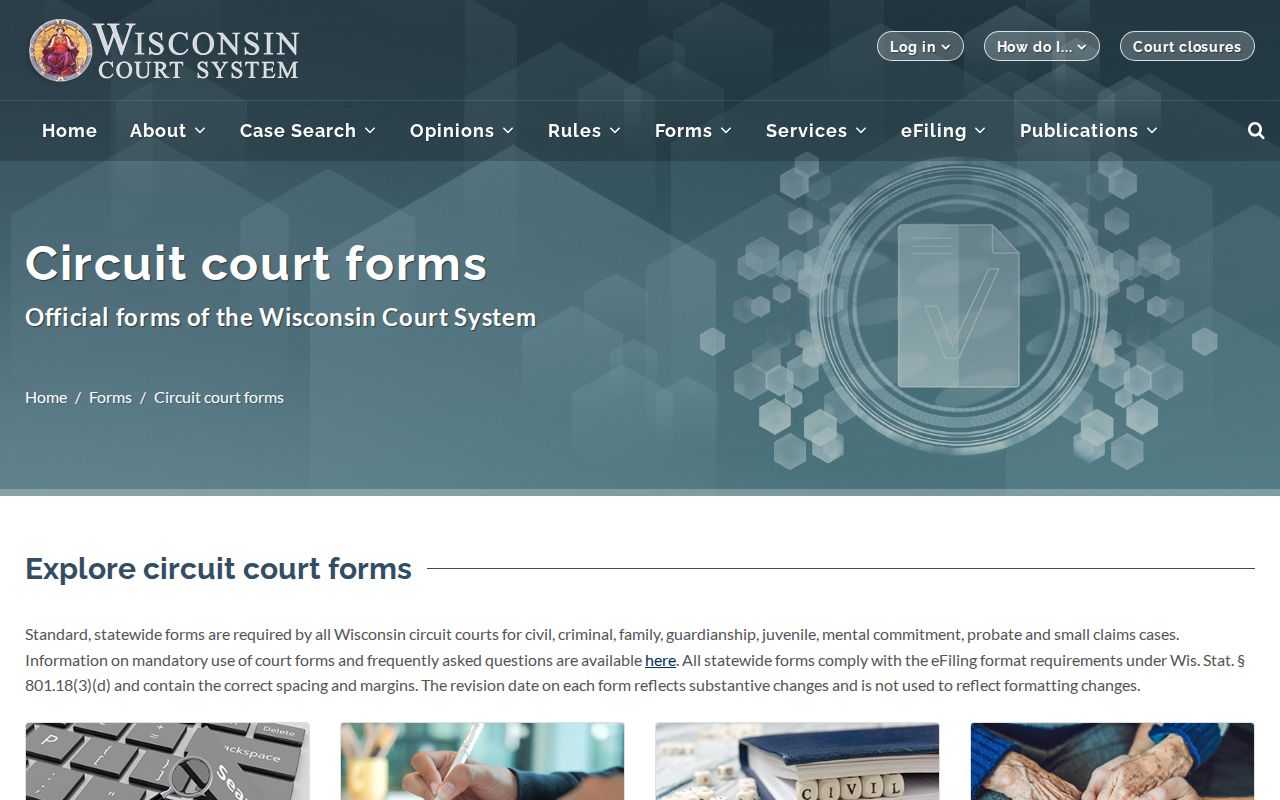
The forms index helps identify document names while the clerk confirms what actually exists in the local case file.
Taylor County Recovery Court Records
Taylor County's Hybrid Recovery Court is a named post-conviction program for people affected by alcohol or drug addiction. Its intensive, wraparound model can touch court orders, reviews, supervision, and treatment-related activity. Public WCCA events may show the court side of that path, but protected treatment details do not become open merely because the program is court connected. The county phonebook provides direct court and justice-office numbers, and the county locations directory confirms the government campus address. The filed judgment and later docket events remain the best public account of what the court ordered.
This local program also shows why “sentence” can mean more than a jail term. A Taylor County case may include probation, conditions, reviews, restitution, and other court-controlled obligations. For the broader arrest trail before filing, use the Taylor County arrest history resource.
Access & Restrictions
Wisconsin's Public Records Law favors access, but public access is not unlimited. Taylor County court staff protect juvenile matters, victim and citizen-witness names and addresses, Social Security numbers, security credentials, juror addresses, and other restricted data. Online redaction does not imply that an unredacted copy is available at the counter. The clerk must apply court policy, statute, and any sealing order to the requested material.
Under Wis. Stat. § 19.35, a request should reasonably identify the record. Give the case number and document title when possible. If WCCA shows no result, ask whether the file is older, confidential, expunged, or simply outside the remote index. A written denial should state reasons and review routes. Do not ask clerk staff to decide what a disposition means for a legal right; they can provide the record, not legal advice.
Note: WCCA is a public index, while the Taylor County clerk controls inspection and copies of the underlying court file.